
 Linkedin
Judge John Sticht Memorial
Assisting those with physical disabilities to excel in the legal profession.
Award Purpose
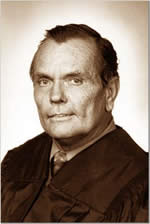
The fund pays tribute to, Honorable John R. Sticht, and is established for the purpose of providing assistance to disabled individuals who are striving for productivity and independence through careers in the legal profession.
Contributors to the Memorial
Procedures and Understandings
A minimum of $500 and a $1,000 maximum will be distributed (pending Memorial funds availability) to the university that the student/alumni is applying from with designation to the awardees for general support of his/her success in legal studies and/or profession.
Eligibility Requirements
This award is intended to assist those who have physical disabilities and are seeking to or are currently practicing in the legal profession; and
Attending or a graduate of one of the Arizona University Schools of Law; and
Able to secure a recommendation from an Arizona University Professor of Law or Arizona Attorney; and
Willing to submit a letter of application which will include information about him/her self and a brief narrative explaining why their interest in the practice of law.
Previous award winners are eligible to re-apply.
Donate Now
2013 Recipient - Patrick Holkins
 Born and raised in Kansas City, MO, Patrick Holkins ventured east to attend Phillips Academy Andover and Harvard University, majoring in government. Patrick was awarded a yearlong public service fellowship by Harvard to promote hearing health services in rural South Africa. He returned to the U.S. in 2010 to begin law school at the University of Arizona James E. Rogers College of Law, where he took courses in employment and disability law and served as an Articles Editor for the Arizona Law Review. In addition to interning with the Civil Rights Division of the Arizona Attorney General and Pima County Juvenile Court, Patrick worked as a Summer Associate at Relman, Dane & Colfax and as an extern at the Equal Employment Opportunity Commission - Office of General Counsel, both in Washington, D.C. In August, Patrick will begin a yearlong clerkship with Justice John Pelander at the Arizona Supreme Court. He hopes to pursue a career as a civil rights litigator.
2011 Recipient Andrew Reilly
 "Law school has provided me with invaluable knowledge and skills that I hope to apply in my future through strong disability advocacy."
During Andrew's sophomore year of college, an automobile accident left him completely paralyzed from the waist down. Mr. Reilly states his early viewpoint that his life would now be sedentary was "naive and fantastically wrong." He became active in numerous sports and currently is team captain for the University of Arizona's Men's Wheelchair Basketball team (ranked second in the country).
"Law school has provided me with invaluable knowledge and skills that I hope to apply in my future through strong disability advocacy."
During Andrew's sophomore year of college, an automobile accident left him completely paralyzed from the waist down. Mr. Reilly states his early viewpoint that his life would now be sedentary was "naive and fantastically wrong." He became active in numerous sports and currently is team captain for the University of Arizona's Men's Wheelchair Basketball team (ranked second in the country).
In addition to being a full time law student and star athlete, Andrew works with outreach programs for disabled veterans and other newly-disabled individuals. Mr. Reilly would like to use his law school and life knowledge to be a strong disability advocate. "I am a better person because of my disability, and I am extremely grateful for my disability and the incredible opportunities that I have gained from it."
2010 Recipient: Karina Ordóñez
 Karina will not allow the obstacles in her life to get in the way of her goals and believes they only make her stronger. In 2008, she was accepted to Arizona State University, Sandra Day O'Connor College of Law. Her goal as a law student, currently a one-L, and a future attorney is to continue her professional development through service in Maricopa County, particularly in National Security Affairs. Her main reasons in choosing this career path are to make a difference one person at a time and to empower others to move this community forward in this ever-changing time. This summer she will study abroad at the Guanajuato Summer Law Institute in Mexico. When she returns, she will extern for Judge Heilman at the Maricopa County Superior Court. In the fall, she will extern for the Eloy Immigration Court. She feels all these experiences and future endeavors will continue to broaden her awareness of the societal needs and help advance justice.
2009 Recipient: Mark Sorokin
 "As a profoundly deaf individual, I have had rights and protections afforded to me virtually my entire life, but I really did not know how to utilize them until I went to law school. I can remember several occasions where I should have had an interpreter to help me out with a given situation—whether it was during soccer practice with my college team, or perhaps during a doctor's visit. I want to practice law because I want to be in a position to help deaf individuals be aware of the rights they have and what they can do."
Mark Sorokin graduated from University of Arizona Rogers College of Law in 2009 and Johns Hopkins University in 2004. Additionally, he obtained his LL.M. in Taxation from NYU in 2010. He has taught American Sign Language to undergraduates, interned with Judge Eckerstrom in Tucson and with the Equal Employment Opportunity Commission in D.C. He is currently a staff attorney with the EEOC, and volunteers with the US Deaf Soccer Association. In his work with the Association, he used his legal education to help the Association regain and maintain their status as a 501(c)3 tax exempt organization.
2008 Recipient: Florin Ivan
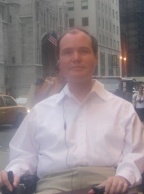
Mr. Ivan determined to do everything he could to overcome the constraints imposed by his disability. He and his parents emigrated from Europe shortly after he was diagnosed with muscular dystrophy. In addition to adapting to a new language, he had to adapt to progressively losing mobility and, finally, to using a wheelchair. His love of the law brought him to law school after receiving his MBA. Mr. Ivan performs volunteer legal research for a multi-county low income housing initiative, and contributes to the Arizona Justice Project. He enjoys helping others, and hopes that what he does will make a difference in his community.
2007 Recipient: Ketti McCormick

Ms. McCormick is not only known for her determination and resourcefulness, but also for her strength of character and amazing sense of humor.
After graduating from the University of Arizona in 1997, she began working at the Yuma County Attorneys' office Criminal Division and fell in love with the work, for its mixture of law and social work.
Currently she works for Davis Miles law firm in Mesa and is also licensed to practice law in New Mexico and California.
Though her diabetes left her blind in 1986, she states she feels blessed to live in a time with so many ways to deal with being blind.
Previous Award Winners
2006 Recipient: W. Patrick Kincaid